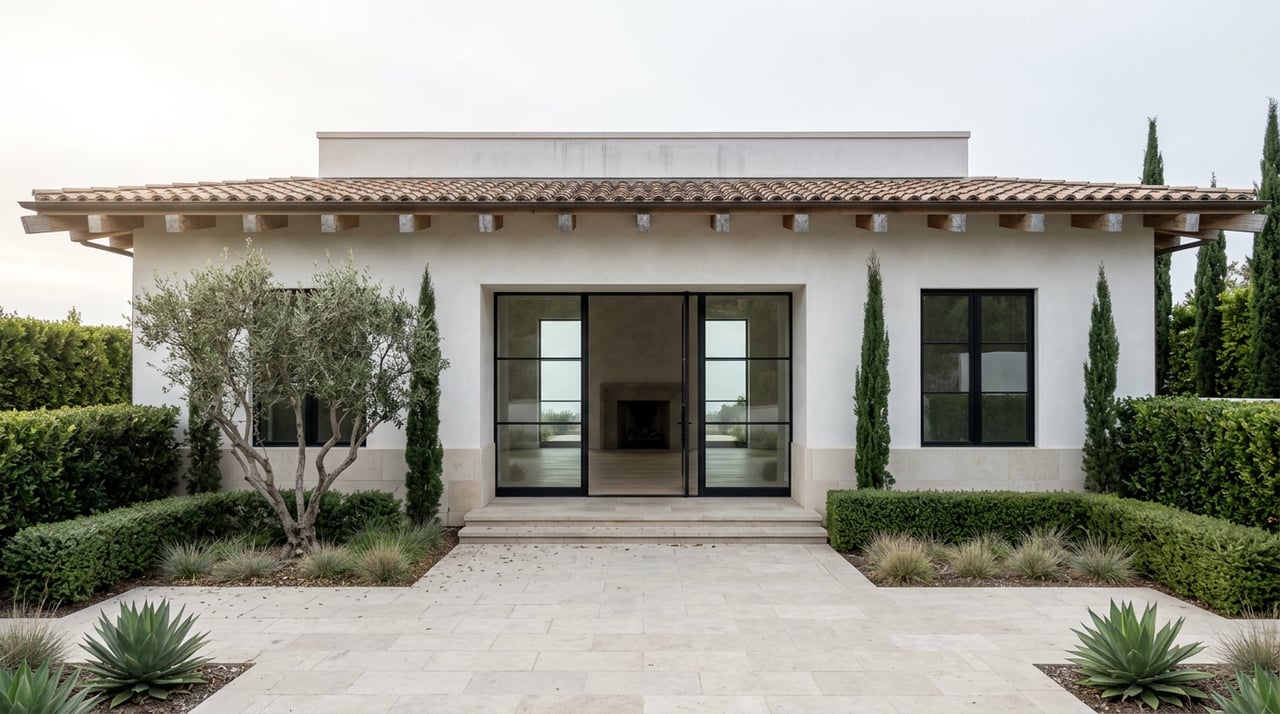
In San Clemente, Two $1.8 Million Homes Can Carry Very Different Monthly Bills
September 24, 2026
September 24, 2026
A buyer touring San Clemente this fall might see a listing in Talega priced at $1.8 million and a listing in Southwest San Clemente priced at $1.8 million and reasonably assume the two homes cost the same to own. The square footage is comparable. The school district is the same. The list price, down to the dollar, matches.
The matching list prices do not guarantee matching monthly carrying costs.
Talega is San Clemente's largest master-planned community, built out in phases beginning in the late 1990s across roughly 3,500 acres of hillside in the northeastern part of the city. The infrastructure that makes Talega feel finished, its roads, parks, and water systems, was financed through Community Facilities Districts rather than paid for upfront by the developer. Those districts issue bonds, and homeowners repay the bonds through an annual special tax known as Mello-Roos.
The Talega Reporter identifies Talega's primary district as CFD 2002-1, along with additional special tax components R5, R6, and Q3. R5 helped fund the Vista Del Mar School facilities. R6 funded road and bridge construction along with additional school facilities, with bonds scheduled to mature in 2033 and a hard limit that the tax cannot be levied past the 2044-2045 fiscal year. Q3 funded Rancho Santa Margarita Water District infrastructure within Talega, also maturing in 2033, with a cutoff no later than 2038-2039.
Combined, these special taxes generally work out to something in the neighborhood of $1.05 to $1.79 per square foot of living area, layered on top of the standard roughly one percent property tax base that applies everywhere under Proposition 13. The special tax rate is also set to climb about two percent annually for as long as the underlying bonds remain outstanding, so the bill does not stay flat even if the assessed value does.
Most homes in Southwest, Central, and North San Clemente, including Shorecliffs, were built before the Mello-Roos Community Facilities Act era or predate the districts that later covered Talega. Buyers in those areas should verify the current tax bill for each parcel.
Here is where the sticker-price comparison breaks down in a way that actually changes what a buyer can qualify for.
Fannie Mae's Selling Guide includes real estate taxes and special assessments in the monthly housing expense used to calculate a borrower's debt-to-income ratio. A CFD charge is not optional and it does not get waived because a buyer likes the floor plan, as the California Debt Financing Guide explains.
An Orange County wide estimate published earlier this year offers a useful order of magnitude here. At an OC median home price of roughly $960,000, a $5,000 annual CFD charge was calculated to reduce a buyer's effective purchasing power by somewhere between $70,000 and $80,000 at a 30-year fixed rate near 6.8 percent. The logic scales with loan size and rate, which means at San Clemente's higher price points, a comparable Mello-Roos bill could erode purchasing power by an equal or larger amount.
Put a rough number on a specific Talega home to see how this plays out. A 2,800 square foot single-family home paying something near the midpoint of that per-square-foot range, say $1.40, would carry an annual Mello-Roos bill around $3,900, or roughly $325 a month. That $325 does not disappear from the buyer's budget. It gets added to PITI, it factors into the DTI calculation the lender runs, and it can be the difference between qualifying for the home a buyer wants and qualifying for a smaller loan than expected.
| Talega | Southwest / Central / North San Clemente | |
|---|---|---|
| Base property tax | Roughly 1% of assessed value | Roughly 1% of assessed value |
| Mello-Roos / CFD tax | Approximately $1.05–$1.79 per sq ft of living area, escalating ~2% annually | Verify by parcel |
| HOA dues | Yes, in most tracts | Varies, often lower or absent in older tracts |
| Housing stock | Newer construction, built 1990s–2010s | Older beach cottages, remodels, and a mix of vintages |
The Mello-Roos amount is not a flat citywide figure. It varies by tract, by which of the three special tax components applies to a given parcel, and by how far along the bond schedule that parcel sits. Two homes on the same Talega street can carry different Mello-Roos bills depending on when their section of the community was built.
If Talega carries a real, ongoing extra cost that older San Clemente neighborhoods do not, a buyer might expect that cost to show up as softer demand or lower relative pricing in Talega. It has not worked out that way.
Across the three months ending August 2026, San Clemente's citywide median sale price sat at $1.8 million, up 6.6 percent from the same period a year earlier, with homes selling in about 32 days on average and 194 homes changing hands in August compared with 169 the year before. Talega's own numbers for March 2026, the most recent neighborhood-level breakdown available, showed a median sale price also near $1.8 million, though sales volume had fallen sharply, from 32 homes sold in March 2025 to just 19 in March 2026.
Fewer homes changed hands, but the price held. That is the signature of a market where sellers are not discounting for the extra carrying cost buyers are absorbing.
Multiple market reports through the first half of 2026 have pointed to the same underlying pattern: Southwest San Clemente and Talega have both run under two months of housing supply, a threshold well inside seller's market territory, while Forster Ranch and Southeast San Clemente have carried closer to three to four months of inventory. Talega, despite its Mello-Roos obligations, is not behaving like a discounted alternative to older coastal neighborhoods. It is behaving like an equally competitive one.
For a buyer, that means the extra few hundred dollars a month in Mello-Roos is not compensated for by a lower entry price or an easier negotiation. Talega's amenities, newer construction, and community infrastructure are apparently worth the extra cost to enough buyers that the tight inventory has not eased.
The safest approach is to treat Mello-Roos as something to verify parcel by parcel rather than something to assume based on neighborhood reputation.
Start by requesting the Assessor's Parcel Number for any home under serious consideration and pulling the current property tax bill through the Orange County Assessor's parcel search. The bill will list any CFD line item and the exact dollar amount due for the current year. From there, the Orange County Treasurer-Tax Collector's portal can confirm payment status and whether any portion is delinquent.
If long-term ownership is the plan, it is worth checking where a given parcel's bonds sit in their repayment schedule. The California Debt and Investment Advisory Commission maintains a public database of bond issuances statewide, searchable by county and district name, which can confirm original bond amounts and scheduled payoff dates. A Talega home whose R6 or Q3 obligations are closer to their 2033 maturity carries a different long-term cost profile than one whose bonds were issued more recently.
Does Mello-Roos ever go away? Some of it does. Talega's R6 and Q3 special taxes are tied to bonds maturing in 2033, with the R6 tax unable to be levied past 2044-2045 and Q3 unable to be levied past 2038-2039. Other Mello-Roos taxes in different communities fund ongoing services rather than bond repayment and may not have a fixed end date at all, so the answer depends entirely on the specific district.
Is every home in Talega subject to Mello-Roos? Not necessarily. Talega was built in phases, and not every tract landed inside the same CFD boundaries. The only reliable way to know is to check the current tax bill for that specific parcel.
Does no Mello-Roos automatically mean a lower total cost? Not always. A home in an older San Clemente neighborhood without a CFD tax may carry higher HOA dues, an older roof or systems that need updating, or a higher price per square foot for comparable square footage. The comparison worth making is total monthly carrying cost, not any single line item in isolation.
Comparing two San Clemente neighborhoods on price alone leaves out the part of the math that actually determines what a buyer can afford and what they will pay every month for years. If you are weighing Talega against Southwest, Central, or North San Clemente and want the real numbers run for a specific property, Mahlia Rittenhouse can walk through the tax bill, the HOA structure, and what it all adds up to before you write an offer. Let's Connect.
This article is general information, not legal, tax or financial advice. Consult a qualified professional about your situation.
Stay up to date on the latest real estate trends.
Whether you're buying, selling, or exploring the Southern California coast, Mahlia delivers local expertise, attentive guidance, and personalized service to help you achieve your real estate goals with confidence.